
Foodtech, safety & quality post pandemic times
Share on facebook Share on twitter Share on whatsapp Share on email Share on print Participate in this webinar organized by the Israel Economic Mission in Chile on Foodtech, Safety & amp; Quality post-pandemic times. This International initiative is aimed at all food handling companies, from restaurants to manufacturing and distribution companies. New ideas will be presented for the reopening of establishments, as well as new technologies to regain the trust of customers. Date: September 8Time: 10:00 A.M Santiago ChileRegistration: https://zoom.us/webinar/register/WN_UfqFSWH1RS-S88sX2T3Myw Share on facebook Share on twitter Share on whatsapp Share on email Share on print Other columns Other news Other events
Entrevistador con espíritu innovador
Conoce a Jennyfer Salvo, periodista que ha entrevistado a líderes como Mijaíl Gorbachov, Mario Vargas Llosa, Shimon Peres entre otros, experta en innovación y negocios internacionales. Actualmente lidera una empresa, Softpower Connections Consulting, que ayuda a gobiernos y empresas a promover la innovación y llevar sus negocios a una escala internacional, ciudadana del mundo, interesada en la igualdad de género. Soy un ser humano curioso, apasionado y abierto, que trato de ayudar a hacer un mundo mejor para todos. Soy madre de dos niños increíbles, que son mi equipo y mis socios. Me siento como un ciudadano del mundo, muy interesado en los problemas globales y la igualdad de género. Amo leer y viajar, y lo he hecho bastante. Tengo miles de libros que han viajado conmigo en todas mis mudanzas. ¡Ahora es más fácil con los libros digitales! Y he tenido mucha suerte de visitar más de 55 países y vivir en 4. Estudié periodismo y trabajé en la principal cadena de televisión y periódico de Chile, así como en otros medios de comunicación de América Latina y Europa. Tuve la oportunidad de entrevistar a líderes mundiales como Mijaíl Gorbachov, Mario Vargas Llosa y Shimon Peres, entre muchos otros. Tuve suerte de ser tan joven y tener la oportunidad de hacer preguntas y recibir respuestas de líderes mundiales. Me he involucrado en políticas públicas por más de 20 años, enfocado en diplomacia pública, marca país y promoción internacional de exportaciones, turismo e inversión, desarrollando actividades de promoción en más de 35 países. Cuéntanos más sobre tu familia, ¿cómo eras de niño? Mis abuelos, donde sobrevivieron a la Segunda Guerra Mundial y yo, crecimos bajo la dictadura de Augusto Pinochet. Creo que ambas situaciones tuvieron una gran influencia en la definición de quién soy. Estudié periodismo porque quería dar voz a la gente, revelar la injusticia y el abuso, crear una sociedad más diversa. Fui muy buena estudiante y creo que mi abuela definió mi compromiso. Ella solía decirme: estudia, estudia, lo que aprendes es lo que tienes. También era músico, tocaba la guitarra en la banda de la escuela. Grabamos un LP y actuamos en televisión. Era tímido pero muy bueno fingiendo no serlo. Tienes una Licenciatura en Información Social y Comunicaciones de la Pontificia Universidad Católica de Chile, ¿por qué decidiste estudiar eso? Cuando tenía 16 años, mi pediatra me dijo: los adolescentes inteligentes tienen que estudiar profesiones poderosas. Ella estaba tratando de decirme que tenía la responsabilidad de usar mi educación para mejorar mi comunidad. Parecía estar interesada en la biología, así que me invitó a compartir un día normal en la vida de un médico. Estuve con ella en su oficina privada, en el hospital visitando pacientes… pasamos 12 horas juntas. Allí me di cuenta de que no me interesaba el dolor físico de sus pacientes. Todo el día estuve tratando de averiguar cómo eran sus vidas, sus condiciones, sus luchas … Descubrí que quería conocer y compartir sus historias. Y como periodista lo hice durante muchos años. Estoy orgulloso de ser parte del equipo que inmediatamente después de la derrota política de Pinochet, comenzó a contar historias ocultas de violaciones de derechos humanos. Fundé el área de investigación del Departamento de Prensa en TVN (Televisión Nacional de Chile) la Emisora Pública de Televisión. Abrimos espacios inesperados. Fue peligroso y doloroso, arriesgado para nuestras vidas, pero me sentí exactamente en el lugar donde soñé estar. Contar otras historias es una misión que atraviesa la vida. Actualmente, además de mi empresa, lidero una revista donde contamos historias relevantes para tomadores de decisiones en más de 45 países y soy panelista en el principal noticiero nocturno de la TV chilena. Todavía siento el calor en mi corazón cuando actúo como el periodista que soy.
THE FIRST YEAR OF A NEW CENTURY

[dflip id=»5693″ ][/dflip]
Expertos internacionales debaten la efectividad de las vacunas para COVID y sus mutaciones
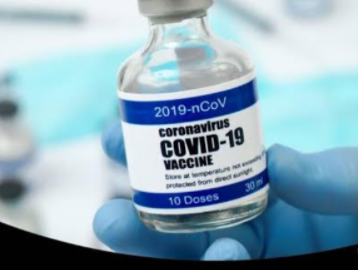
En el contexto que enfrentamos hoy a nivel mundial con las mutaciones del COVID-19, la Universidad de Tel Aviv (TAU) y Softpower Connection, su representante para Chile, Perú, México, Costa Rica y Panamá, realizaron el webinar “Covid -18 vacuna y mutaciones. ¿Quién ganará la carrera? En la actividad, realizada de forma virtual, expuesta por la Dra. Ella Sklan, del Departamento de Microbiología Clínica e Inmunología, Escuela de Medicina Sacker y la Dra. Adi Stern de la Escuela Shmunis de Biomedicina e Investigación del Cáncer & amp; Edmond J. Safra del Centro de Bioinformática. Ambos profesores titulares de la TAU. La Dra. Ella Sklan hizo un análisis de los diferentes tipos de vacunas utilizadas en los últimos años, desde la hepatisis A y B, pasando por la influenza, la poliomielitis y el ébola, para mostrar la diferencia y composición de la vacuna Sars Covid-19. Finalizó las características de las vacunas que se están administrando actualmente y su efecto sobre el sistema respiratorio . Por su parte, la Dra. Adi Stern se refirió a las mutaciones. Analizó las dos mutaciones Spike 501 más conocidas presentes en el Reino Unido y en cepas africanas, consideradas las más transmisibles, aunque no necesariamente las más virulentas en relación a muertes de personas infectadas. También analizó la mutación pico 484, presente en Sudáfrica, Brasil, y en cepas japonesas, variante que provocó que Gran Bretaña cerrara sus fronteras para todos los países de Sudamérica y Portugal. Aseguró que esto podría permitir el escape de los anticuerpos, pero la buena noticia, dijo, es que «es muy probable que una vacuna de dos dosis proteja contra ambas mutaciones». “Este es el debate global y queremos acercarlo a Chile. Hoy la curva de contagio sigue creciendo exponencialmente y tenemos más de 15 personas infectadas con la cepa británica. Si bien los procesos de vacunación para adultos mayores comienzan la próxima semana, debemos prepararnos y anticiparnos a los próximos desafíos. Por eso, para nosotros en SPC es clave transmitir estas conversaciones y compartir las experiencias de Israel, un país que tiene características muy similares a las de Chile y cuya experiencia hasta la fecha ha sido muy positiva ”, dice Jennyfer. Salvo, director ejecutivo de Sotfpower Connections. Israel ocupa el primer lugar en la lista de países que ya han logrado suministrar más dosis a sus ciudadanos y en primer lugar si se tiene en cuenta el porcentaje de población inoculada. Hasta el momento, cabe destacar que en menos de tres semanas el 20% de los habitantes de ese país ya han recibido la primera dosis de la vacuna, es decir, más de dos millones de personas (ourworldindata.org). Considerado uno de los países más innovadores del mundo, Israel es el segundo ecosistema de innovación más grande del mundo, el tercero en productividad del conocimiento y la tecnología y el quinto en sofisticación empresarial. Tiene la industria de capital de riesgo más grande per cápita, invierte el 4,7% de su PIB ($ 247,9 mil millones) en I + D y genera más de 1000 Start-Ups tecnológicas por año. Por su parte, la Universidad de Tel Aviv es la octava del mundo en innovación y emprendimiento, la única universidad no norteamericana que se ubica entre las 15 mejores en programas de MBA y tiene la mayor cantidad de unicornios fundadores per cápita.
International experts debate the effectiveness of vaccines for COVID and its mutations
Share on facebook Share on twitter Share on whatsapp Share on email Share on print In the context that we face today worldwide with the mutations of COVID-19, the University of Tel Aviv (TAU) and Softpower Connection, its representative for Chile, Peru, Mexico, Costa Rica and Panama, held the webinar “Covid -18 vaccine and mutations. Who will win the race? In the activity, carried out virtually, presented by Dr. Ella Sklan, from the Department of Clinical Microbiology and Immunology, Sacker School of Medicine and Dr. Adi Stern from the Shmunis School of Biomedicine and Cancer Research & amp; Edmond J. Safra of the Center for Bioinformatics. Both full professors of the TAU. Dr. Ella Sklan made an analysis of the different types of vaccines used in recent years, from hepatisis A and B, through influenza, polio and Ebola, to show the difference and composition of the Sars Covid vaccine- 19. He finalized the characteristics of the vaccines that are currently being administered and their effect on the respiratory system. For her part, Dr. Adi Stern referred to mutations. He analyzed the two best-known Spike 501 mutations present in the United Kingdom and in African strains, considered the most transmissible, although not necessarily the most virulent in relation to deaths of infected people. He also analyzed the peak mutation 484, present in South Africa, Brazil, and in Japanese strains, a variant that caused Great Britain to close its borders for all the countries of South America and Portugal. He said this could allow the antibodies to escape, but the good news, he said, is that «a two-dose vaccine is very likely to protect against both mutations.» “This is the global debate and we want to bring it closer to Chile. Today the contagion curve continues to grow exponentially and we have more than 15 people infected with the British strain. While the vaccination processes for older adults begin next week, we must prepare and anticipate the upcoming challenges. For this reason, for us at SPC it is key to transmit these conversations and share the experiences of Israel, a country that has characteristics very similar to those of Chile and whose experience to date has been very positive, ”says Jennyfer. Salvo, CEO of Sotfpower Connections. Israel occupies the first place in the list of countries that have already managed to supply more doses to their citizens and in first place if the percentage of the inoculated population is taken into account. So far, it should be noted that in less than three weeks 20% of the inhabitants of that country have already received the first dose of the vaccine, that is, more than two million people (ourworldindata.org). Considered one of the most innovative countries in the world, Israel is the world’s second largest innovation ecosystem, third in knowledge and technology productivity, and fifth in business sophistication. It has the largest venture capital industry per capita, invests 4.7% of its GDP ($ 247.9 billion) in R&D, and generates more than 1000 technology Start-Ups per year. For its part, Tel Aviv University is the eighth in the world in innovation and entrepreneurship, the only non-North American university that ranks in the top 15 for MBA programs and has the highest number of founding unicorns per capita. Share on facebook Share on twitter Share on whatsapp Share on email Share on print Other columns Other news Other events
Vacuna para el Coronavirus v/s Mutaciones
INSCRÍBETE AQUÍ https://forms.gle/zrBUrHQ5pPQU13PG9
Vaccine for Coronavirus v / s Mutations
SIGN UP HERE https://forms.gle/zrBUrHQ5pPQU13PG9
Auscham Project is the 3rd best evaluated in the Prochile Services Contest with the support of SPC

Share on facebook Share on twitter Share on whatsapp Share on email Share on print Alliance between the Chilean-Australian Chamber and Softpower Connections was the third best evaluated project in the Prochile 2021 Service Contest. The initiative seeks to promote the offer of services for mining in Chile in the state of Western Australia, where 88% of the economic activity of METS (Mining Equipment, Technology and Services) is concentrated, which is how the mining sector is defined. mining suppliers in that country. “At Softpower Connections we are proud to collaborate with Auscham in promoting the services offered by Chilean mining providers. It is time to expand your impact and offering to markets with as many opportunities as Australia offers. We are convinced that this is a virtuous association that, thanks to Prochile’s financing, benefits both nations ”, said Jennyfer Salvo, CEO of Softpower Connections. In the previous call, the project postulated collaboratively with Auscham achieved a score of 79.19 points, rising to 91.43 in this version, obtaining 3rd place among the 8 awarded. In addition, it was approved without budget reduction or modifications. The impact of METS in Australia was AUS $ 71 billion annually in 2019, 54% in the state of Western Australia, 25% in Queensland and 21% in New South Wales, while in Western Australia, the Pilbara region concentrates 88% of economic activity. Share on facebook Share on twitter Share on whatsapp Share on email Share on print Other columns Other news Other events
Proyecto Auscham es el 3º mejor evaluado en Concurso Servicios de Prochile con apoyo de SPC
Alianza entre la Cámara Chileno-Australiana y Softpower Connections fue el tercer proyecto mejor evaluado en el Concurso de Servicios 2021 de Prochile. La iniciativa busca promover la oferta de servicios para la minería de Chile en el estado de Australia Occidental, donde se concentra el 88% de la actividad económica de las METS (Mining Equipment, Technology and Services), que es como se define al sector de proveedores de la minería en ese país. “En Softpower Connections estamos orgullosos de colaborar con la Auscham en la promoción de los servicios que ofrecen los proveedores chilenos de la minería. Ya es hora de expandir su impacto y oferta a mercados con tantas oportunidades como las que ofrece Australia. Estamos convencidos de que esta es una asociación virtuosa que gracias al financiamiento de Prochile, beneficia a ambas naciones” señaló Jennyfer Salvo, CEO de Softpower Connections. En la convocatoria anterior, el proyecto postulado colaborativamente con Auscham logró un puntaje de 79,19 puntos, subiendo a 91,43 en la presente versión, obteniendo el 3er lugar dentro de los 8 adjudicados. Además, fue aprobado sin reducción de presupuesto ni modificaciones. El impacto de las METS en Australia fue de AUS$ 71 mil millones anuales en 2019, un 54% en el estado de Australia Occidental, un 25% en Queensland y un 21% en Nueva Gales del Sur, mientras que, en Australia Occidental, la región de Pilbara, concentra un 88% de la actividad económica.
Auscham Project is the 3rd best evaluated in the Prochile Services Contest with the support of SPC
Alliance between the Chilean-Australian Chamber and Softpower Connections was the third best evaluated project in the Prochile 2021 Service Contest. The initiative seeks to promote the offer of services for mining in Chile in the state of Western Australia, where 88% of the economic activity of METS (Mining Equipment, Technology and Services) is concentrated, which is how the mining sector is defined. mining suppliers in that country. “At Softpower Connections we are proud to collaborate with Auscham in promoting the services offered by Chilean mining providers. It is time to expand your impact and offering to markets with as many opportunities as Australia offers. We are convinced that this is a virtuous association that, thanks to Prochile’s financing, benefits both nations ”, said Jennyfer Salvo, CEO of Softpower Connections. In the previous call, the project postulated collaboratively with Auscham achieved a score of 79.19 points, rising to 91.43 in this version, obtaining 3rd place among the 8 awarded. In addition, it was approved without budget reduction or modifications. The impact of METS in Australia was AUS $ 71 billion annually in 2019, 54% in the state of Western Australia, 25% in Queensland and 21% in New South Wales, while in Western Australia, the Pilbara region concentrates 88% of economic activity.
